
Liquid vs Granular Fertilizer: Which Is Right for Your Lawn
Granular versus liquid fertilizer: how each one behaves, when I reach for each, and why a hybrid program usually wins.
Treatment Programs · 3 min read · Published July 13, 2026 · Updated August 23, 2026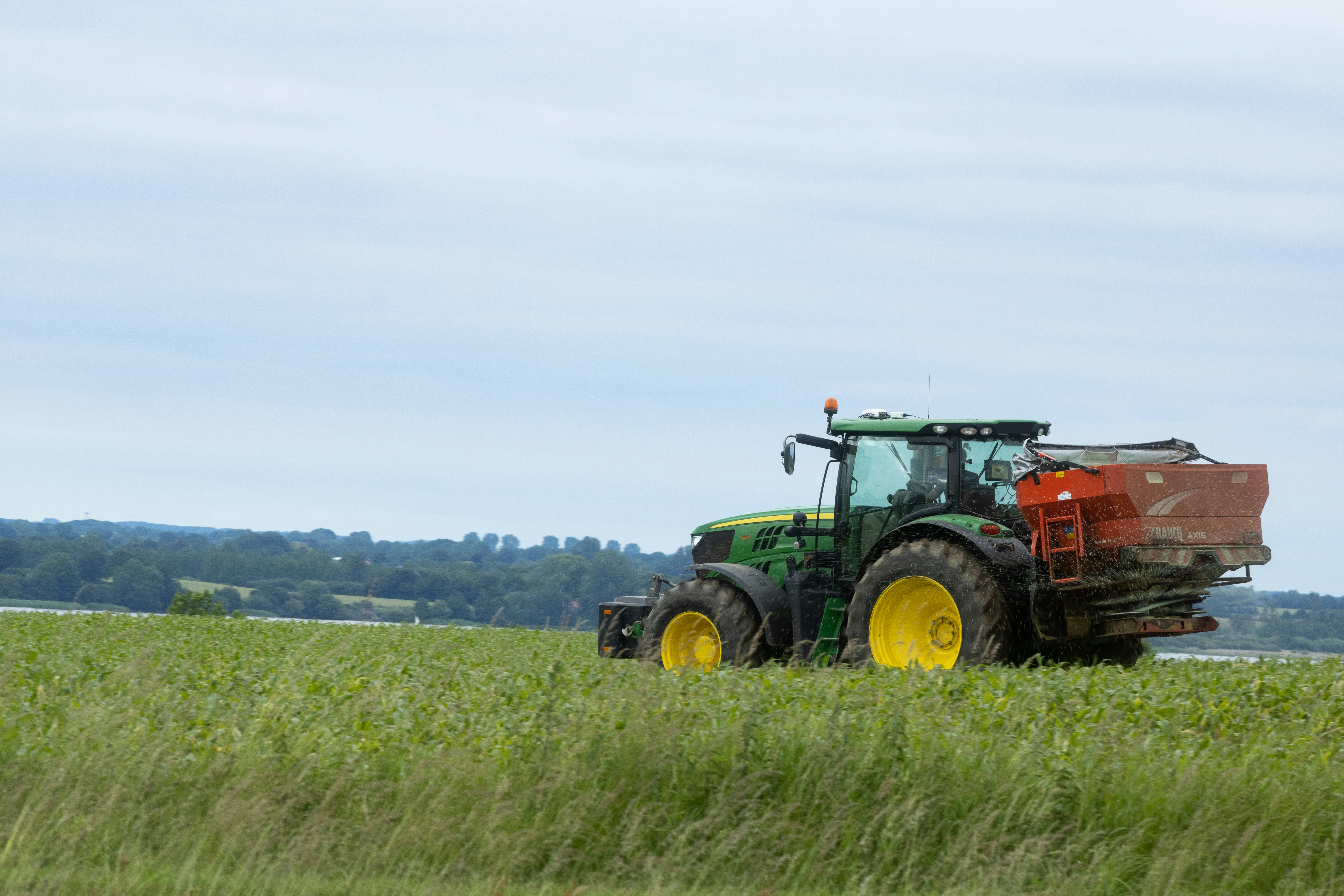
Customers sometimes notice their invoice looks different from a neighbor's and ask why. Usually the answer is that we're using a different fertilizer form on their lawn: liquid or granular. Both deliver the same nutrients, but they behave differently enough that the choice affects cost, timing, and results.
Granular fertilizer is my default for routine seasonal feedings. It's spread with a broadcast or drop spreader, it's easy to calibrate for even coverage, and many granular products are formulated with slow-release nitrogen coatings that feed the lawn steadily over six to ten weeks instead of dumping everything at once. Granular is also more forgiving. If my spreader overlaps slightly on a pass, the risk of burning the lawn is much lower than with a concentrated liquid mistake.
Liquid fertilizer earns its place when I need speed or precision. Because it's already dissolved, the lawn takes it up almost immediately, which is why I reach for liquid when a customer wants fast green-up before an event, or when a lawn is recovering from stress and needs a quick boost. Liquid also lets me tank-mix a feeding with a weed control or fungicide application in the same pass, which saves a trip and gets multiple jobs done in one visit. The tradeoff is that liquid requires a calibrated sprayer, more technical mixing knowledge, and it doesn't offer the same weeks-long slow release that granular does.
In practice, I run a hybrid program: granular for the backbone seasonal rounds, and liquid for spot corrections, combined applications, and situations where a lawn needs an answer this week, not in three weeks. Neither form is universally better, they're just different tools for different jobs.
References: Clemson Cooperative Extension — Fertilizing Lawns: https://hgic.clemson.edu/ Purdue Turfgrass Science — Turf Fertilization Guide: https://turf.purdue.edu/
Related Articles
- Seasonal Lawn Care Schedules: What to Apply and When by Region
A region-by-region guide to seasonal lawn care — timing for fertilization, weed control, and pest management across cool-season and warm-season turf types.
- How to Get Rid of Weeds in Your Lawn Without a License
A guide to lawn weed control using general-use herbicides any homeowner can buy. Learn which products work best for common weeds and how to apply them.
- DIY Lawn Care Schedule: Month-by-Month Treatment Plan for Beginners
A month-by-month lawn care calendar for homeowners. Know what to do each month to build a thick, healthy lawn — fertilizing, weed control, and mowing.